Rat and Dragon Compatibility: The Trine Pair That Runs on Momentum
Rat and dragon compatibility is one of the easiest wins in the Chinese zodiac. They belong to the same trine — the Rat, Dragon, and Monkey group that shares a taste for momentum, ideas, and a little showmanship — so they tend to click fast. The Rat plans the route from the back of the room; the Dragon drives the big move from the front. The only friction that reliably shows up is the Rat's caution against the Dragon's appetite for risk, and it is fixable by simply giving each their own lane.
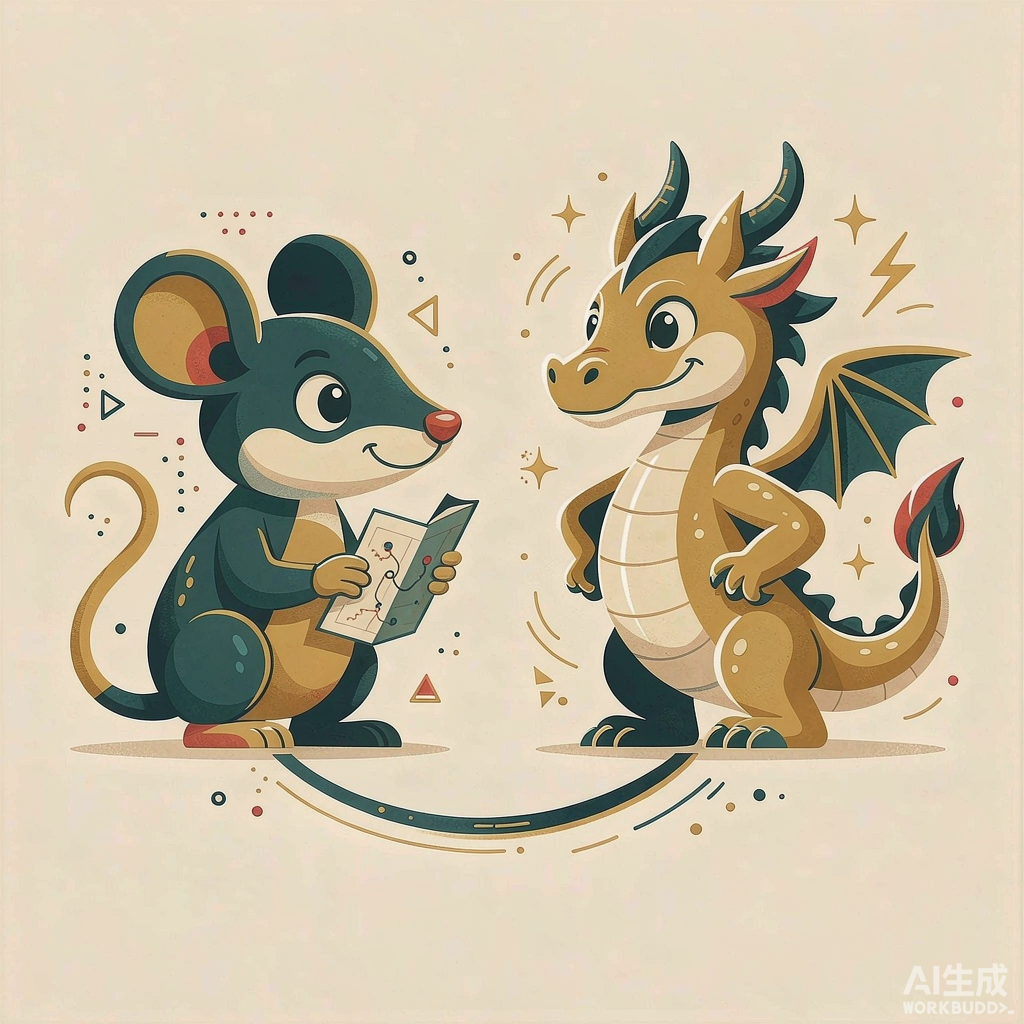
A trine pair: they share the rhythm, which is why the match feels natural instead of negotiated.
The animals are a shorthand for behavior, not a verdict. If you read them as descriptions of how two people show up — who maps the plan, who takes the stage, how each handles a risky decision — the Rat-and-Dragon pairing stops being a "score" and becomes a predictable, workable dynamic you can actually steer.
Why Rat and Dragon click in the first place
They are three signs apart, which puts them in the same trine. In practice that means they are both energized by motion: a plan that is moving, a room that is alive, a problem worth solving. Where many pairs spend their early energy figuring out whether they even like the same kinds of things, this pair skips that step. They like the same kinds of things — progress, cleverness, and a bit of spectacle.
That shared appetite is the reason "Rat and Dragon" shows up constantly on the favorable lists. It is not magic. It is two people who are bored by the same things and excited by the same things, which removes the largest source of early friction most couples face.
The three observable ways a Rat-Dragon pair actually behaves
Most of what gets labeled "compatibility" between these two comes down to three repeatable patterns. Watch for these rather than for a star rating.
1. The strategist and the showman. The Rat is the one reading the room, mapping the route, and pulling the small strings that make things land. The Dragon is the one on stage, declaring the vision, and making the bold move everyone remembers. They are not competing for the same role, which is rare and valuable. The Rat gets to operate where it is most comfortable — behind the scenes, in control of the plan — and the Dragon gets the audience it genuinely enjoys. The pair works best when both accept the division instead of resenting it.
2. Two momentum junkies with different throttle settings. Both want a fast yes. The difference is the Rat wants to map it before moving, and the Dragon wants to move and map on the way. To the Dragon, the Rat's pause reads as cold feet or doubt; to the Rat, the Dragon's charge reads as recklessness. Neither is wrong. They are just calibrated to different speeds, and the mismatch only hurts when it goes unnamed.
3. The admiration gap. The Dragon needs to be admired out loud — not flatteringly, but specifically, for the call it just made. The Rat shows respect differently: by being useful, by having the plan ready, by quietly making the Dragon look good. That is real respect, but it is silent, and the Dragon can experience silence as "you weren't impressed." Meanwhile the Rat can feel steamrolled when the Dragon charges past a careful warning the Rat only hinted at. The gap is almost never about love. It is about recognition traveling at two different speeds.
"My Dragon partner charges into things I'd rather think through — are we even compatible?"
This is the most common Rat-Dragon question, and the answer is usually yes — and that tension is the entire point of the match. One of you is the brake and one of you is the engine, and a car with two engines or two brakes goes nowhere useful. The problem is not the difference. The problem is when the brake goes silent and the engine reads the silence as agreement.
If you are the Rat, say the doubt as a specific question ("what happens if the client says no?") instead of a sigh. If you are the Dragon, give the Rat one sentence of "here's the risk I already priced in" before you launch. That single habit converts the pair's only real friction into a shared decision instead of a quiet grudge.
Four concrete fixes that keep a Rat-Dragon pair thriving
None of these require changing who you are. They require naming the lanes you are already in.
1. Write down who owns what. The Rat owns the plan, the logistics, and the read on other people. The Dragon owns the launch and the room. When each stays in lane the pair is close to unstoppable. The trouble starts only when the Dragon begins second-guessing the plan or the Rat begins blocking the launch — and that is your early-warning signal, not a sign the match is wrong.
2. Turn silent worry into a shared question. The Rat's instinct is to notice the risk and go quiet; the Dragon's instinct is to read quiet as green light. Break it by making the worry audible as a question, not a mood. "Before we commit, what's our exit if X happens?" takes ten seconds and prevents the Dragon from ever saying "you never said anything."
3. Applaud out loud, Rat. This one sounds small and it is the biggest. The Dragon genuinely needs the audience, and the Rat genuinely forgets to provide it because respect, to a Rat, is doing the work. A specific "that was a great call" from the Rat lands like water in a desert for the Dragon. It costs the Rat almost nothing and resets the tone of the whole week.
4. Reframe the brake as the cliff-spotter. The Dragon tends to read caution as timidity. Change the story: the Rat's job in this pair is to see the cliff before the Dragon drives past it. The brake is not the enemy of the engine; it is what keeps the engine from driving off something. When the Dragon stops calling the caution "fear" and starts calling it "the save," the old friction largely disappears.
Questions people ask about Rat and Dragon compatibility
Are Rat and Dragon really a "perfect match"?
Closer than most, but "perfect" is the wrong word. They are a trine pair, which means shared rhythm, not zero friction. The friction they do have is about pace and recognition, not about core values or whether they respect each other. Most pairs would trade their problems for this one.
Which other signs does the Rat match well with?
Within the same trine, Monkey is the third easy match — the three of them are the "movators" who like ideas and momentum. Outside the trine, the Rat also pairs well with the steady Ox and the gentle Goat. For the contrast case, Rat and Horse is the classic six-clash pairing, useful to read side by side so you can see what a friction pair actually looks like next to a trine one. See our breakdown of Rat and Horse compatibility for that opposite end of the spectrum.
Is the Dragon compatible with its other trine mates?
Dragon and Snake is the other easy trine match and a different flavor of the same "shared rhythm" dynamic — the Snake brings the patience and the read, the Dragon brings the fire. For the harder end, Dragon and Dog is a six-clash pairing where the same Dragon energy rubs a different sign the wrong way. Read Dragon and Snake and Dragon and Dog to see both ends of how the Dragon behaves in partnership.
Does being in the same trine mean we'll never fight?
No. It means the fights are predictable and small — pace and recognition, not loyalty or values. The pair that knows its fights in advance can defuse them in advance, which is most of what "compatibility" is good for anyway. For the general method of staying together through a labeled mismatch, our guide to staying despite a clash applies just as well to a trine pair having an off week.
What about two Dragons, or two Rats?
Same-sign pairs double a strength and double a weakness, which is a different dynamic from a trine match. If you are wondering whether doubling the Dragon or the Rat helps or hurts, our piece on dating or befriending someone with the same sign covers it directly. And for the broader "which signs make easy friends versus hard ones" context, the friendship compatibility breakdown names the whole Rat-Dragon-Monkey trine as natural allies.