Incompatible Chinese Zodiac Signs but Happy Together: How a "Wrong" Match Really Works
"Incompatible" is not a verdict. When the charts say two signs clash, they are pointing at one predictable friction point — not announcing that love is impossible. Couples who are "wrong on paper" stay happy for the same reason any couple does: they name the friction early and agree in advance who bends when. The only edge these couples have is that the rough patch is predictable, so you can plan around it instead of being blindsided by it.
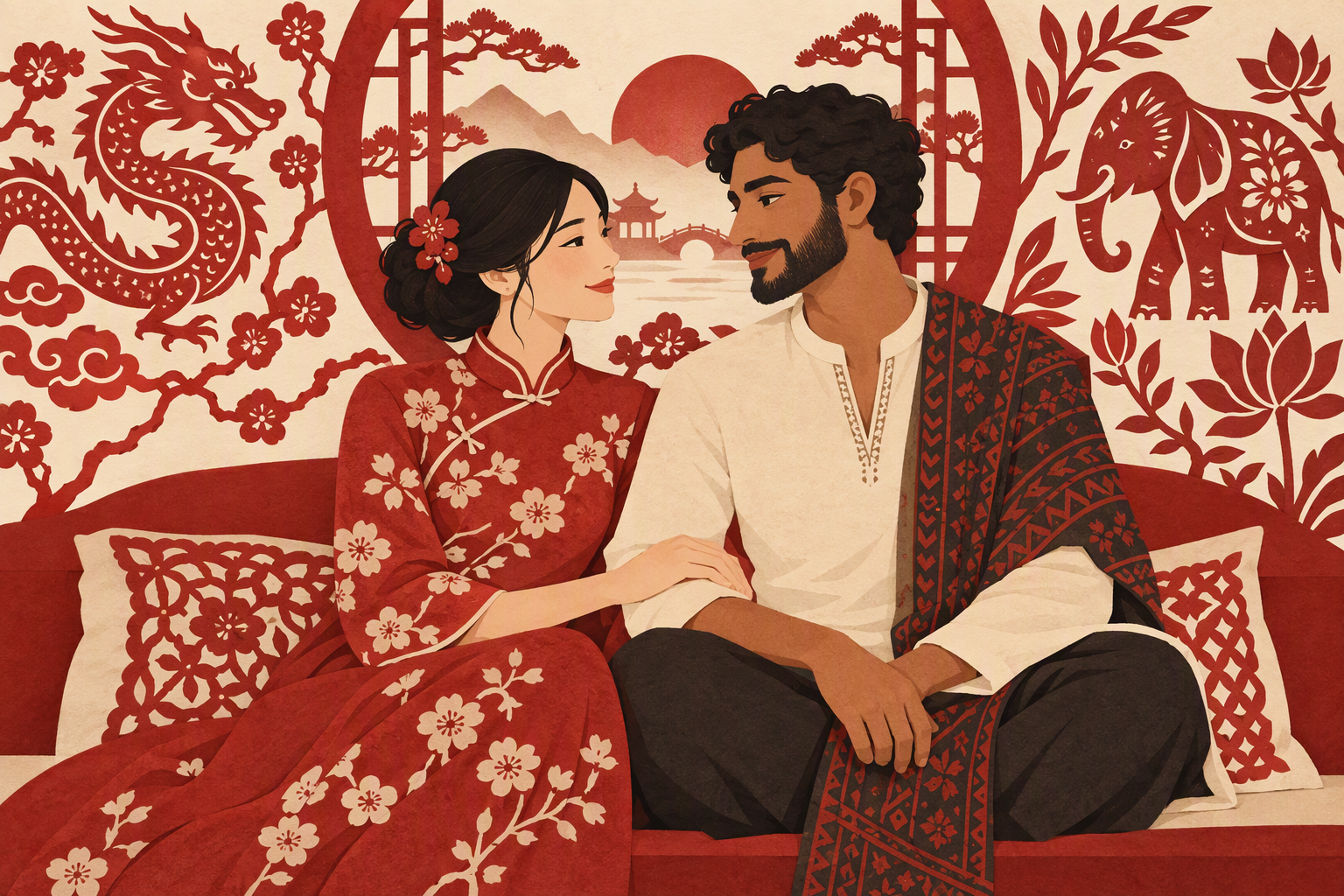
A "clash" sign usually just shows up in the opposite rhythm — and rhythm is something you can plan around.
The animals are a shorthand for behavior. A sign that "clashes" with yours typically just shows up in the opposite rhythm: it moves first where you move last, or it goes quiet where you get loud. That is annoying, not fatal. The match works when you treat the clash as a known habit you both manage — much like you'd manage one partner being a night owl and the other an early riser. You don't breakup over sleep schedules; you build a system.
Why "incompatible" is a weaker warning than it sounds
The word comes from classical pairings built for arranged marriages, where families weighed harmony and hierarchy. A "clash" sign was one likely to resist the family's plan, not one destined to make you miserable. Modern couples choose each other, which already removes the problem the old system was worried about. So the label tells you where you'll need patience; it does not tell you whether you'll be happy.
The three things that actually break these couples
It is almost never the sign. It is one of three ordinary problems — and the sign just makes them easier to spot:
1. Refusing to name the pattern. "We just fight a lot" goes nowhere. "We fight when one of us decides fast and the other needs to think" gives you something to fix. The sign gives you the vocabulary; using it is on you.
2. Using the label as an excuse. "We're a bad match, that's why I won't try" turns a description into a self-fulfilling prophecy. The chart predicted friction, not failure. A forecast of rain is not a reason to never leave the house.
3. Mistaking intensity for incompatibility. A loud, passionate clash can feel like doom but is often just two people who care a lot. Calm couples sometimes drift further precisely because nothing forces them to talk. Heat is not the same as a mismatch.
A standing agreement that survives the clash
Before the next fight, write down one rule. Example for a fast-decision sign paired with a slow one:
"Any decision over a set dollar or emotional weight gets a 24-hour hold. The fast one may not announce it; the slow one must say yes or no within the window — silence is not a veto."
That single line removes most of the clashes these pairs have, because it separates "I need to think" from "I am blocking you." Put it somewhere you both see it. The couples who stay happy are not the ones with fewer clashes; they are the ones who automated the resolution.
A real pattern — the Snake and Tiger who "shouldn't" work
You hear the line constantly: "Everyone says Snake and Tiger clash, but we've been fine for six years — what gives?" What gives is that the clash is about style, not substance. The Tiger wants to charge and declare; the Snake wants to watch and read the room. They fought about it for the first year, then made a rule: the Tiger announces intentions, the Snake gets one private objection before anything goes public. Six years in, the "clash" is just their rhythm. The label was right about the friction and wrong about the outcome.
When to actually worry
A responsible line: the sign is never a reason to tolerate control, isolation, or cruelty. If a relationship is unsafe, that is not "incompatibility" and no chart explains it away. Use the zodiac to understand habits, not to excuse harm. If being together makes you smaller, the animal is not the problem — the behavior is.
Questions people ask about staying together despite a "bad" match
"My family says our signs clash — should I call off the wedding?"
The old pairings were written for family harmony, not personal happiness, and you are the one in the relationship. Let the clash tell you where you'll need patience, then decide with your partner how you'll handle it. A label from a stranger shouldn't outvote the life you're building.
"We fight constantly but everyone says we're a perfect match — are the charts wrong?"
The charts describe the pairing, not your communication. A "perfect" match can still fight if neither of you has learned to disagree well. The sign isn't wrong; it just doesn't cover the part that actually predicts happiness — how you treat each other day to day.
"Can a 'clash' couple be happier than a 'perfect' one?"
Often, yes. Clash couples are forced to talk about how they differ early, which builds a real system. Perfect-match couples sometimes skip that work and drift. The pair that plans around its friction usually outlasts the pair that assumes it has none.
"How do I know if we're incompatible or just bad at relationships?"
Try the agreement test: pick one recurring fight, make one concrete rule about it, and see if the fights drop. If a single clear agreement removes most of the friction, you were never incompatible — you were just unmanaged. If the same fight repeats with no rule holding, the issue is the dynamic, not the animals.
For the specific flavor of friction, see our breakdown of Dragon and Dog couples, or go broader with which signs make the best friends. Or head back to the zodiac compatibility home to compare other pairs.