Chinese Zodiac Compatibility and Splitting the Bill: Why Some Signs Grab the Check and Others Reach for 50/50
Your birth animal does not decide who pays; it only points at a default money habit. What chinese zodiac compatibility can describe is a "payer reflex": how each animal tends to handle the check — grabbing it to show care, splitting to the cent, or happily letting the other treat. The part the calculators never print is that fighting over the bill is almost never about money; it is about whether each person feels "taken care of" or "respected for their fairness." Name the reflex, and you can split the dinner without splitting the relationship.
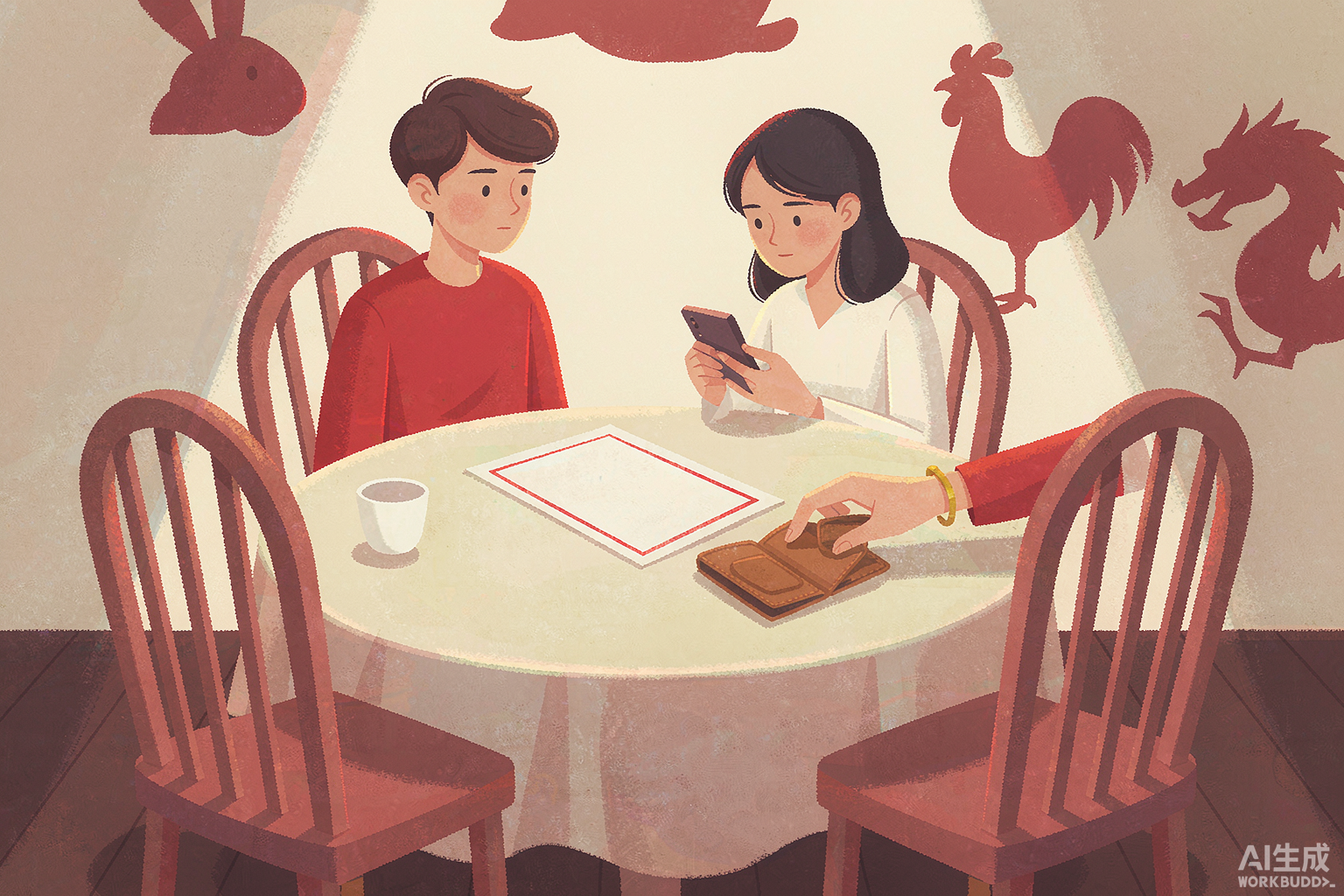
One reaches for the leather folder, the other reaches for the split — the payer reflex is a habit you can name, not a verdict on who you are.
The animals are shorthand for temperament, not a rulebook for your wallet. When you read chinese zodiac compatibility this way — as a set of recognizable reactions to the bill — the "who pays" question stops being "which sign is cheap" and becomes "whose reflex needs to feel cared for, and whose needs to feel fair." A Rooster who insists on 50/50 is not stingy. She is on a fairness reflex the chart never bothered to name. The responsible read is that the animal shapes the default; what you do with the check is still yours.
Why "which sign should pay" is the wrong question
The question itself is a trap, because it hands your money habit to your birth year. The honest answer is that every animal can grab, split, or receive; the difference is the shape of the reflex, not whether it exists. Most of what gets labeled "he's cheap because he's a Monkey" is actually "he hates the awkward pause at the table and lets someone else fill it." That is a habit, not a destiny. When you read chinese zodiac compatibility for the reflex instead of the verdict, the whole category becomes useful instead of insulting.
The payer reflex: four recognizable styles
Across the twelve animals, the reaction to the bill clusters into four patterns. You will recognize your person in one of these long before you check a chart.
| Payer reflex | Animals | What it looks like | What it actually needs |
|---|---|---|---|
| The Grabber | Dragon, Tiger, Horse, Dog | Reaches for the check first, treats paying as a way to show care, generosity, or face. | To be allowed to give, not teased or out-maneuvered every time. |
| The Splitter | Rooster, Ox, Snake | Wants the exact amount, Venmos the difference, uncomfortable with imbalance. | To be seen as an equal, not a dependent who is "taken care of." |
| The Receiver | Rabbit, Pig, Goat | Relaxed about who pays, happy to be treated, rarely initiates the split. | Permission to treat back, so the care flows both ways. |
| The Tactical one | Rat, Monkey | Stays quiet at the table, lets others step up, keeps a private mental score. | A direct ask — silence here means "I'm fine either way," not "pay for me." |
Notice none of these says "bad with money." They say "different default," and a default is the easiest thing in the world to interrupt, because you can see it coming. The chart is a heads-up about the reflex, not a ranking of who is generous and who is not. The same animal can be a grabber on a good-week payday and a splitter on a tight one.
My girlfriend splits everything 50/50 but her sign "likes to be taken care of" — are we backwards?
This is the most common bill question, and it is the one the old lists answer badly. The part of chinese zodiac compatibility the calculators never print is that a flavor note ("this sign is lucky to be cared for") is a weather report for temperament, not a job description for your relationship.
"My girlfriend is a Rooster and she insists we split everything 50/50, but every site says her sign 'likes to be taken care of' — are we doing our relationship backwards by the chart's rules?"
The useful answer is that the chart is mixing up two different things: a sign's traditional "lucky to be cared for" flavor, and an individual's actual fairness habit. A Rooster who splits is not "doing it wrong"; she is running her own precision reflex, which is honestly more sustainable than a grabber who quietly resents every check he picked up. The sign points at a tendency, your habit decides the rest, and a couple that agrees on the system is ahead of a couple that "matches" a label. Reading chinese zodiac compatibility as "my animal says I should be spoiled" is the one move that turns a gentle hint into a demand.
The 12-animal payer map
The four styles above are the headline; here is where each animal lands, and the one reflex to watch for in that person.
| Animal | Reflex | The tell at the table |
|---|---|---|
| Rat | Tactical | Goes quiet when the bill arrives; lets others move first, remembers who paid last time. |
| Ox | Splitter | Pulls out the calculator app without a second thought; hates vague "you got it." |
| Tiger | Grabber | Snatches the folder mid-conversation; treats paying as a point of pride. |
| Rabbit | Receiver | Smiles and lets you pay; will quietly treat you next time if you signal it's welcome. |
| Dragon | Grabber | Makes a small show of paying; reads the split as "you don't trust me to host." |
| Snake | Splitter | Wants the exact figure; discomfort with anyone "owing" anyone. |
| Horse | Grabber | Pays impulsively and generously; can overspend to keep the mood bright. |
| Goat | Receiver | Goes with the flow; rarely initiates, content to be hosted. |
| Monkey | Tactical | Distracts, jokes, lets the moment pass; keeps score privately. |
| Rooster | Splitter | Insists on precision; "50/50" is a respect signal, not a cheapness signal. |
| Dog | Grabber | Treats friends and partners alike; feels good being the one who covers it. |
| Pig | Receiver | Relaxed and warm about money; happy to pay or be paid without keeping count. |
The map earns trust only when you use it to understand a reflex, never to excuse one. A Dragon who resents every check he grabs is not "just being a Dragon" — that is a communication gap the animal did not cause. Our five-signal quick check shows how often the real problem is just an unspoken reaction, and the myths-debunked piece runs down the other places the chart gets over-read the same way.
Three signals the bill fight is about respect, not money
The chart is useful only when you watch for the tells that the argument has crossed from "habit" into "unspoken meaning."
1. The fight is about who "won" the check, not the amount. If a $4 difference turns into a 20-minute standoff, the money was never the point. The sign describes the shape of the reflex; the heat describes the meaning underneath. Our stay-despite-clash guide covers how to keep one small standoff from becoming a silent retreat.
2. One person treats paying as love, the other as fairness. The grabber reads "let me pay" as care; the splitter reads the same moment as "I want to be your equal." Neither is wrong, but they are speaking two languages. Name the language and the fight evaporates.
3. The resentment shows up later, in unrelated fights. A bill that "didn't matter" but quietly ranked you surfaces as "you never appreciate me." That delayed echo is the tell it was never about the dinner. For the bigger pattern of carrying things between moments, the grudge-clock guide maps the same dynamic.
Four things to do when your payer reflexes don't match
None of this requires either of you to become a different animal. It requires deciding the bill together before it hits the table.
1. Name the reflex before the meal. "I'm a grabber, you're a splitter — let's just decide now so we don't wrestle the folder later" is the single sentence that ends most bill fights. The mismatch hurts only when it is invisible.
2. Alternate on purpose. Let the grabber grab this time and the splitter split next time. Alternation is how a Dragon and a Rooster stop reading each other's habit as a slight. A quick read of our partner-success piece shows the same logic for any moment where one person's reflex dwarfs the other's.
3. Give the receiver permission to treat you back. A Rabbit, Pig, or Goat who never initiates may simply be waiting for a green light. "Your turn next week" is an invitation, not a demand, and it keeps the care flowing both ways.
4. Ask the tactical one directly. If your Rat or Monkey partner goes quiet at the table, don't read silence as "fine with anything." A calm "do you want to split or should I get this?" pulls them into the decision instead of leaving them a bystander.
Questions people ask about zodiac signs and splitting the bill
Which chinese zodiac sign is most likely to insist on splitting the bill?
On the traditional read, the precise, fair-minded animals — Rooster, Ox, and Snake — lean toward exact splits, while Dragon, Tiger, Horse, and Dog tend to grab the check first. But chinese zodiac compatibility describes a payer reflex, not a law. A Rooster can be a generous grabber and a Dragon can be a meticulous splitter; the animal points at a default, and your actual habit decides the rest. Use the label to understand the reflex, not to predict who reaches for the wallet.
Is it a red flag if my partner always lets me pay?
Not by itself. "Always letting the other pay" is the Receiver reflex — Rabbit, Pig, and Goat lean this way — and it is a comfort-with-being-cared-for pattern, not a lack of care. It only becomes a problem if the same person also avoids every other money conversation; that is a communication gap, not a sign verdict. Reading chinese zodiac compatibility as "my sign makes me a leech" is the one move that turns a useful heads-up into an excuse, and the why-incompatible explainer shows where these labels actually come from.
My sign "likes to be taken care of" but I'd rather split — am I doing it wrong?
No. The traditional flavor note is a weather report, not a job description. Thousands of people run opposite to their animal's "flavor" every day, and what matters is that you and your partner agree on the system, not that you match a label. For how this plays in the wider modern-dating world, our modern-dating breakdown covers money and the apps without the mysticism, and our same-sign guide shows the reflex shows up the same way whether the animals match or not.
Can two people with opposite payer styles still work?
Yes, and they often balance each other, because the grabber makes the receiver feel cherished and the splitter keeps the grabber from quietly overspending. The risk is only when the grabber reads the splitter's fairness as "distance" or the receiver reads the grabber's generosity as "control." Name the reflex, decide the bill together before it lands, and the opposite styles become a balance instead of a standoff. For how this same dynamic plays on a labeled mismatch, the Snake and Pig compatibility piece is the same friction on a six-clash board.