Chinese Zodiac Compatibility and Grocery Shopping: Does Your Sign Decide Who Buys the Food?
Your sign does not decide who buys the groceries, and chinese zodiac compatibility cannot predict who plans the week's meals. The animal on your chart has no opinion about the produce aisle, and a birth year never wrote a shopping list. What the chart can describe is the default grocery reflex each of you brings to the kitchen: the Planner who maps the whole week and labels the freezer, the Spontaneous one who grabs what looks good and eats out twice, the Easy-Eater who eats whatever's there and rarely starts a shop, or the Outsider who would rather order than enter a store. The "we argue about food because our signs clash" story is almost never about the animal. It is two different grocery systems that were never compared out loud, and once you name the style, the "you never buy anything" fight stops feeling like a verdict.
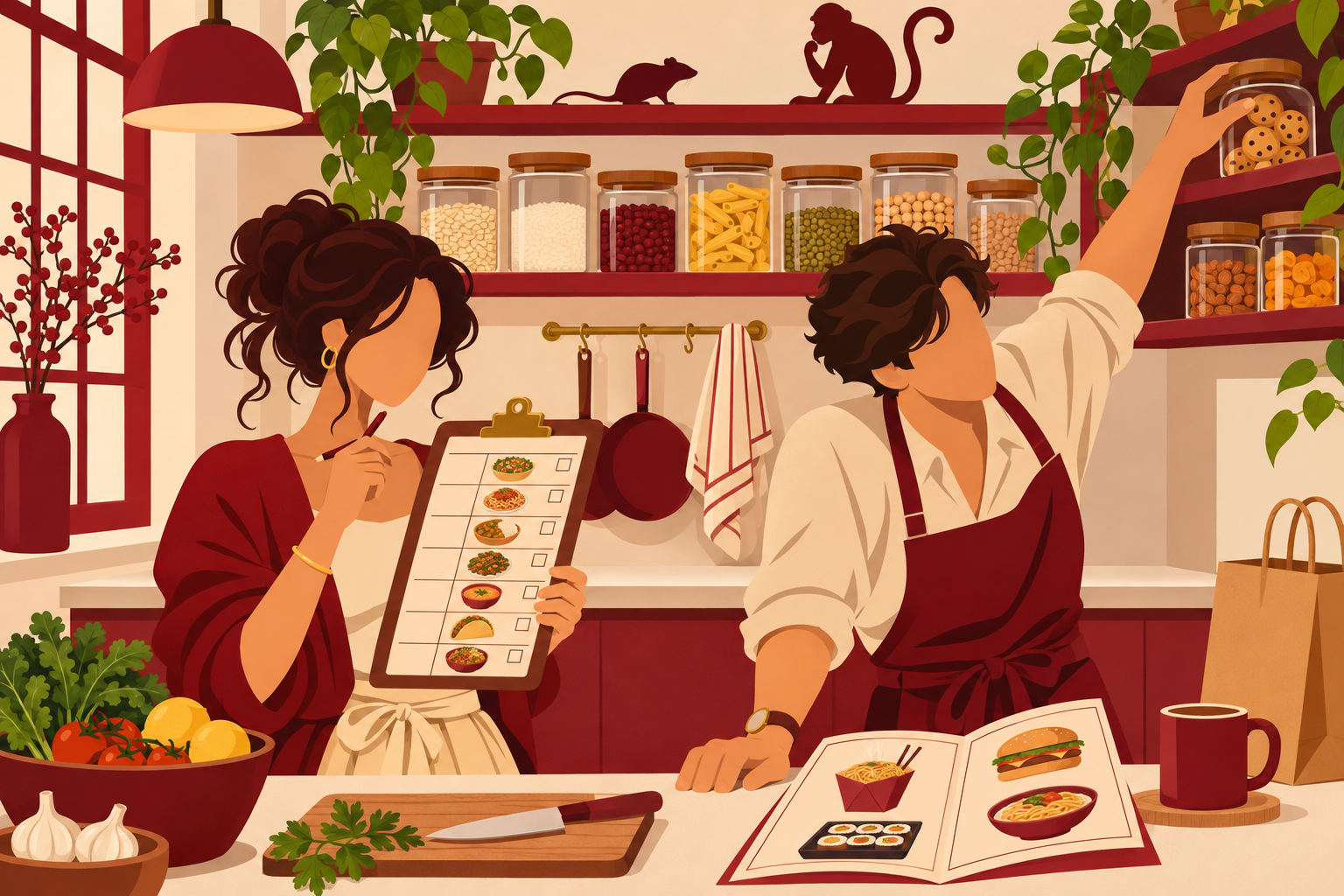
The grocery fight in most kitchens is about two different systems that were never compared out loud, not about two animals on a chart.
The animals are shorthand for temperament, not a logistics manual. When you read chinese zodiac compatibility this way, as a set of recognizable ways people behave in the kitchen, the "my boyfriend is a Monkey so he never shops" story stops being "which animal is the lazy one" and becomes "whose grocery reflex am I tripping over." A Planner who maps the week is running a control-and-waste instinct she was handed, not broadcasting that she doesn't trust you to feed yourself. The responsible read is that the animal shapes the default; what you do with the overlap is still between the two adults and the fridge, and the chart never gives anyone an excuse to call a difference of grocery style "he's cursing our kitchen."
Why "which sign buys the food" is the wrong question
The question itself is a trap, because it hands a whole household-personality to the birth year. The honest answer is that every animal can be a careful shopper and every animal can be a happy takeout orderer; the difference is the rhythm of how each handles the kitchen, not whether they're on your side. Most of what gets labeled "she's an Ox so she hoards the pantry" is actually "she was raised to hate waste," and that is upbringing, not a verdict. When you read chinese zodiac compatibility for the grocery default instead of the sentence, the whole category becomes useful instead of insulting, and you stop grading your partner from a birth year while the milk goes sour in the door.
The four grocery styles: recognizable ways couples handle the kitchen
Across the twelve animals, the way a person behaves at the store and in the kitchen clusters into four patterns. You will recognize your person in one of these long before you check a chart.
| Grocery style | Animals | What it looks like | What it actually means |
|---|---|---|---|
| The Planner | Rat, Ox, Snake | Maps the week, writes the list, buys in bulk, labels the freezer, hates waste. | Control reads as care; a stocked kitchen reads as "home is handled," not "I don't trust you." |
| The Spontaneous | Tiger, Horse, Monkey | Grabs what looks good, forgets the list, eats out often, impulse-buys snacks not meals. | Freedom reads as spontaneity; the empty fridge reads as "we'll figure it out," not "I don't care." |
| The Easy-Eater | Rabbit, Goat, Pig | Eats whatever's there, rarely starts a shop, goes with the flow, lets the partner handle it. | Comfort reads as easygoing; not-shopping reads as "I'm happy with what you bring," not "I'm helpless." |
| The Outsider | Dog, Dragon, Rooster | Prefers to eat out or order, treats the big shop as a chore to avoid, grabs something on the way. | Precision or loyalty reads as "I'd rather not do the chaos of a store," not "I won't contribute." |
Notice none of these says "wants to starve you." They say "different default," and a default is the easiest thing in the world to meet halfway, because you can see it coming. The chart is a heads-up about the kitchen rhythm, not a rating of who's a thoughtful partner. The same animal can be a Spontaneous takeout-orderer during a busy week and a Planner on vacation once the schedule finally loosens, and our alone-time piece covers the same clash when it shows up as who needs to recharge and who needs the room.
My boyfriend never buys groceries and I plan everything, is that a sign thing?
This is the most common kitchen question, and it is the one the old lists answer badly. The part of chinese zodiac compatibility the calculators never print is that a Planner and a Spontaneous partner are not "fighting signs"; they are two systems that were never compared out loud.
"I'm a Rat who plans the whole week's meals and grocery list and my Monkey boyfriend eats whatever's there and never buys anything — is 'who buys the food' a sign thing, or just who was raised to think ahead?"
The useful answer is that the Rat here is the Planner end of her build: the same list-making instinct that makes her a rock also makes her read the Monkey's "I'll just grab something" as "he doesn't care about our home," which escalates her. The Monkey on the other side is a Spontaneous one whose grab-and-go is exactly why every plan lands late, which the Rat reads as carelessness. The fight isn't the signs. It is two people who each quietly decided what "a stocked kitchen" is allowed to look like, and never said it. Reading chinese zodiac compatibility as "my animal means I get to resent his fridge" is the one move that turns a gentle style mismatch into a real bond wound, and the why-incompatible guide maps the same folk "doomed" label when it gets slapped onto a living relationship.
The 12-animal grocery map
The four styles above are the headline; here is where each animal lands, and the one tell to watch for when the fridge starts to matter.
| Animal | Grocery style | The tell in the kitchen |
|---|---|---|
| Rat | The Planner | Lists everything, buys the week, labels the freezer, flinches at waste. |
| Ox | The Planner | Methodical, bulk-buys, hates throwing food away, shops on a schedule. |
| Tiger | The Spontaneous | Grabs what looks good, impulse buys, rarely follows a list. |
| Rabbit | The Easy-Eater | Eats what's there, rarely starts a shop, gentle about whatever lands. |
| Dragon | The Outsider | Prefers to eat out, treats the big shop as a chore to hand off. |
| Snake | The Planner | Strategic, buys exactly what's needed, no impulse, precise. |
| Horse | The Spontaneous | Eats on the go, often eats out, fridge is a suggestion. |
| Goat | The Easy-Eater | Goes with the flow, lets the partner shop, content with what's made. |
| Monkey | The Spontaneous | Forgets the list, buys snacks not meals, figures it out later. |
| Rooster | The Outsider | Precise but would rather order; dislikes the chaos of a crowded store. |
| Dog | The Outsider | Loyal, grabs something on the way, avoids the big weekly shop. |
| Pig | The Easy-Eater | Comfortable, eats what's put in front, rarely initiates a shop. |
The map earns trust only when you use it to understand a grocery reflex, never to excuse one. A Monkey who "never shops" but also does the dishes and remembers the dog is not "just being a Monkey"; that is a partner who shows up, and the animal did not cause the care. Our quick-check piece runs the same "two rhythms, one kitchen" logic on the signals you can read without a calculator, and the myths-debunked guide covers the other places the chart gets over-read the same way.
Three signals the grocery fight is about two systems, not the sign
The chart is useful only when you watch for the tells that the gap has crossed from "different default" into "unspoken scorekeeping."
1. The wound is about being unseen, not about the missing milk. If you're stewing "I plan every meal and he never lifts a finger" but he also does the dishes and walks the dog, the sting is the missing acknowledgment, not the missing groceries. The sign describes the shape of his kitchen habit; the heat describes the meaning underneath. A Planner who lists and a Spontaneous one who grabs are both right, and the stay-despite-clash guide shows how to name that before it goes quiet.
2. One reads the other's non-shopping as "doesn't care about our home." The Spontaneous one (Tiger, Horse, Monkey) genuinely figures it out as he goes; the Easy-Eater (Rabbit, Goat, Pig) is content with whatever you make. A direct "I'm not mad that you didn't shop, I'm running on empty and the fridge is bare, can we split this" is the sentence that breaks the loop, because the non-shopper wasn't ignoring your home; he was living in a different system, and the partner-success piece maps the same misunderstanding when one person's need gets read as the other's failure.
3. The Planner mistakes her system for the only adult way. A Rat, Ox, or Snake who maps the week gets read (and reads herself) as "the responsible one," when she's just running a control reflex the only way she knows. A gentle "your list is a love language, I see it, but I'd rather we trade off" pulls him in without making his style a crime, the same friction our attachment-style piece covers when one partner's order shows up loud and the other's shows up late.
Four things to do when your grocery styles don't match
None of this requires anyone to become a different animal. It requires deciding, out loud, what "a stocked kitchen" is allowed to look like between the two of you.
1. Name the grocery style, not the animal. "You're a Spontaneous grab-and-go and I'm a Planner, so here's the split: you handle two dinners, I handle the list" is the sentence that ends most kitchen wars, because the non-shopper was never actually abandoning you; he was in a different system, and the mismatch hurts only when it is invisible.
2. Don't read a non-shopper as a non-contributor. A Spontaneous or Outsider partner who rarely shops may be the one who does the dishes, walks the dog, or remembers the birthday. The responsible read is that the style is a grocery reflex, not a sentence on his character, but turning the difference into "our signs fight about food" is a behavior, not an animal, and the same-sign piece is the same dynamic when two people share an animal but still trip over kitchen habits.
3. Split the labor by reflex, not by guilt. A Planner who loves the list should own it; a Spontaneous one who hates the store should own pickup or two easy dinners. Hand each the part that fits, and the kitchen gets calm; the animal was never the wall, the unspoken "you should be like me" was, and the chores piece covers the same split when the question becomes who does the dishes.
4. Don't let the grocery gap become a family scoreboard. If "my wife never shops because of her sign" becomes proof that "she'll never build a home with me," that is not the sign, that is a pattern, and the chart never licenses it. The useful move is to separate the grocery style from the actual bond, the same logic our work-family guide applies to any misunderstanding that isn't really about the surface thing, and the splitting-bill piece handles the money half of the same conversation.
Questions people ask about zodiac signs and grocery shopping
Which chinese zodiac sign is best at grocery shopping or meal planning?
On the traditional read, the Planner animals (Rat, Ox, Snake) tend to map the week, write the list, and hate waste, while the Spontaneous animals (Tiger, Horse, Monkey) grab what looks good and eat out. But chinese zodiac compatibility describes a grocery default, not a competence certificate. A Monkey can learn to plan, and an Ox can burn out on the list. Use the label to understand the kitchen rhythm, not to crown who's the good shopper.
My partner never buys groceries and I do all the planning, is that a sign thing?
The Planner-versus-Spontaneous split shows up most as two systems that were never compared out loud, but it is a habit of mind, not an animal verdict. Chinese zodiac compatibility can describe a grocery default; it does not mean the kitchen is doomed. The useful move is to name the style out loud and split the labor by reflex, the same way our quick-check piece handles the clash when one person plans and the other floats.
Can two people with totally different grocery styles share a kitchen?
Yes, once the Planner stops reading the Spontaneous partner's grab-and-go as carelessness and the Spontaneous one stops reading the list as control. The risk is only when one side keeps score or the other refuses to trade a dinner. Name the styles, swap a clear "you plan two, I grab two" for a silent power struggle, and the opposite styles become a manageable routine instead of a nightly standoff, the same logic our stay-despite-clash guide applies to any misunderstanding that isn't really about the surface rhythm.
Does chinese zodiac compatibility predict who handles the food shopping?
No. Chinese zodiac compatibility can describe a default tendency — who plans, who grabs, who orders — but it never predicts who keeps the kitchen running. The responsible read is that the animal shapes a reflex, and the two adults decide the grocery split, the same way our why-incompatible guide keeps the chart out of any verdict and in the "useful heads-up" lane.