Chinese Zodiac Compatibility and Pet Care: Who Feeds the Dog Is a Habit, Not a Verdict
Your sign does not decide who loves the dog; it only points at the default pet-care reflex. What chinese zodiac compatibility can describe is the shape of the chore: the Steady Scooper who tops up the bowl without being asked, the Three-Day Wonder who means well and forgets by Thursday, the Full-Reliance who adores the animal but assumes you'll handle the logistics, or the Enthusiastic Walker who'll take the dog on a 5-mile hike and never refill the water. The "he never feeds the cat" fight is almost never about the animal. It is about two pet-care languages that were never negotiated, and once you name the reflex, the litter box stops being a relationship verdict.
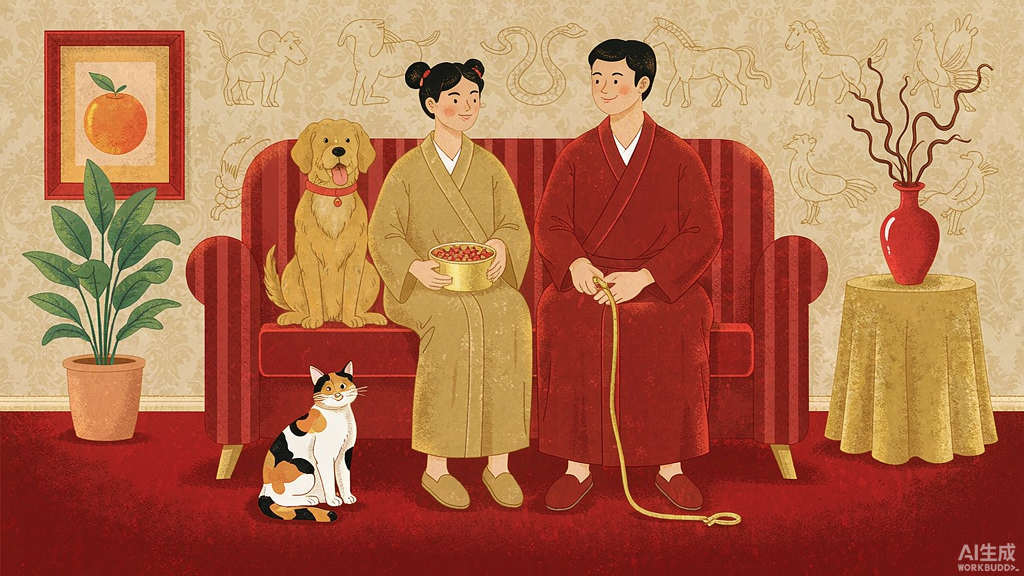
The pet is rarely the problem. The unspoken "whose turn is it" almost always is.
The animals are shorthand for temperament, not a ranking of who deserves the dog. When you read chinese zodiac compatibility this way, as a set of recognizable ways people handle the daily care, the "my sign means I'm lazy with pets" story stops being "which animal is neglectful" and becomes "whose pet-care reflex am I misreading." A Three-Day Wonder who forgets the feeding schedule is running a burst-then-fade instinct he was handed, not broadcasting that he doesn't care about the cat. The responsible read is that the animal shapes the default; what you do with the gap is still between the two of you, and the chart never gives either of you an excuse to call a forgotten bowl "he doesn't love us."
Why "which sign is best with pets" is the wrong question
The question itself is a trap, because it hands a whole personality to the birth year. The honest answer is that every animal can love a pet and every animal can forget a feeding; the difference is the rhythm of the care, not whether it lands. Most of what gets labeled "he's a Tiger so he's hopeless" is actually "he was raised to equate love with the fun parts, so the routine feels like the boring half." That is a reflex, not a destiny. When you read chinese zodiac compatibility for the pet-care default instead of the verdict, the whole category becomes useful instead of insulting, and you stop grading your partner from a birth year while the dog waits by the empty bowl.
The four pet-care styles: recognizable ways people handle the chores
Across the twelve animals, the reaction to the unspoken "so who's on litter duty this week" clusters into four patterns. You will recognize your person in one of these long before you check a chart.
| Pet-care style | Animals | What it looks like | What it actually means |
|---|---|---|---|
| The Steady Scooper | Rat, Ox, Snake, Rooster | Feeds, cleans, and books the vet without being asked; the clinic recognizes them by name. | Care is a quiet routine he'd never let slip on purpose. |
| The Three-Day Wonder | Tiger, Horse, Monkey | Adopts the toy, the hike, the cuddle burst; forgets the refill by day three. | Loves the pet loudly, struggles with the boring half of love. |
| The Full-Reliance | Rabbit, Goat, Pig | Adores the animal, assumes you're handling food, walks, and the appointment. | Not careless; just never volunteered for the logistics. |
| The Enthusiastic Walker | Dog, Dragon | Grabs the leash for a 5-mile outing, leaves the empty bowl exactly where it was. | Wants the play, skips the chore; the love is real, the routine isn't. |
Notice none of these says "doesn't care about the pet." They say "different default," and a default is the easiest thing in the world to meet halfway, because you can see it coming. The chart is a heads-up about the care rhythm, not a ranking of who loves the animal hardest. The same animal can be a Three-Day Wonder at 22 and a Steady Scooper at 35, once a few years of being the one who forgot have done their quiet work.
My boyfriend feeds the cat every morning but I forget for days, is that his sign?
This is the most common pet-care question, and it is the one the old lists answer badly. The part of chinese zodiac compatibility the calculators never print is that an Enthusiastic Walker partner who shows up for the animal and a Three-Day Wonder who lets the routine slip are not "clashing signs," they are two pet-care reflexes that were never named out loud.
"My boyfriend is a Dog who feeds our cat every single morning without being asked, and I'm a Tiger who forgets for days — is 'who takes care of the pet' a sign thing, or just who's more responsible?"
The useful answer is that the Dog's reliability here is the dependable end of his instinct: the same "I've got this" that sends him out the door with the leash also makes him notice the empty bowl before the cat does. The Tiger on the other side is a Three-Day Wonder whose love shows up as the big burst, the toy, the cuddle, and then the schedule quietly evaporates. The fight isn't the signs. It is two people who each quietly decided what "being good to the pet" is allowed to look like, and never said it out loud. Reading chinese zodiac compatibility as "my animal means I get to skip the bowl" is the one move that turns a gentle rhythm mismatch into real resentment, and the chores-compatibility guide covers the same "whose turn is it" friction when it's the dishes instead of the dog.
The 12-animal pet-care map
The four styles above are the headline; here is where each animal lands, and the one tell to watch for when the care starts to feel one-sided.
| Animal | Pet-care style | The tell at home |
|---|---|---|
| Rat | Steady Scooper | Runs the schedule like a system; refill, walk, and vet on a calendar. |
| Ox | Steady Scooper | Quiet, dependable care; the pet trusts him before the guests do. |
| Tiger | Three-Day Wonder | Big bursts of affection, then the routine drifts; means well, forgets. |
| Rabbit | Full-Reliance | Adores the animal, assumes you booked the appointment; gentle, not absent. |
| Dragon | Enthusiastic Walker | Wants the adventure with the pet, skips the quiet daily care. |
| Snake | Steady Scooper | Private, precise care; notices the small things no one else does. |
| Horse | Three-Day Wonder | Excitement first, consistency later; the leash is fun, the bowl is work. |
| Goat | Full-Reliance | Soft and devoted but waits for the cue; rarely starts the chore. |
| Monkey | Three-Day Wonder | Playful and present, then distracted; the pet misses the follow-through. |
| Rooster | Steady Scooper | Runs a tight ship; food, water, and bedding on a visible routine. |
| Dog | Enthusiastic Walker | First to the leash, last to the bowl; lives for the outing. |
| Pig | Full-Reliance | Loving and easy, happy to let you lead the logistics. |
The map earns trust only when you use it to understand a pet-care reflex, never to excuse one. A Tiger who "isn't a routine person" but sets a phone alarm because you said the cat was losing weight is not "just being a Tiger"; that is a person who heard you, and the animal did not cause the growth. Our quick-check piece runs the same "two reflexes, one household" logic on the signals you can read without a calculator, and the myths-debunked guide covers the other places the chart gets over-read the same way.
Three signals the pet-care mismatch is about reflex, not the sign
The chart is useful only when you watch for the tells that the gap has crossed from "different default" into "unspoken scorekeeping."
1. The panic is about the silence, not the affection. If you're annoyed "he never feeds the cat" but he's the one who drives to the emergency vet at 2am, the wound is the missing routine, not the missing love. The sign describes the shape of the reflex; the heat describes the meaning underneath. A Steady Scooper who needs the schedule and a Three-Day Wonder who finds it redundant are both right, and the stay-despite-clash guide shows how to name that before it goes quiet.
2. One assumes, the other carries. The Full-Reliance (Rabbit, Goat, Pig) believes you've got the food and the appointment; the Steady Scooper beside them reads the silence as "he doesn't care." A direct "I assumed you were on food, I've been on walks" is the sentence that breaks the loop, because the Rabbit, Goat, or Pig wasn't neglecting; he was waiting for a lane that was never drawn.
3. The Enthusiastic Walker is mistaken for not caring. A Dog or Dragon who grabs the leash for the fun outing but leaves the bowl empty gets read as thoughtless, when they're just allergic to the boring half. A gentle "I love that you walk him, can we split the feeding too" pulls them into the chore without making their style a crime, the same friction our alone-time piece maps when one partner's energy shows up as motion and the other's as rest.
Four things to do when your pet-care styles don't match
None of this requires either of you to become a different animal. It requires deciding, out loud, what "good to the pet" is allowed to look like in this home.
1. Name the reflex out loud. "I show love by walking him, not by filling the bowl, not because I don't care" is the sentence that ends most pet-care wars, because the Full-Reliance or Steady Scooper was never actually accusing you; they were bracing for a neglect that wasn't there. The mismatch hurts only when it is invisible.
2. Don't confuse a skipped bowl with a skipped heart. A Three-Day Wonder who adores the pet but drifts on the schedule is not "not into us"; he's running a burst-then-fade instinct, and a shared calendar beats a shared zodiac every time. The responsible read is that the style is a pet-care reflex, not a verdict on his devotion, but turning the litter box into a scoreboard is a behavior, not an animal — and the splitting-bill piece is the same dynamic when money becomes the scoreboard instead of the care.
3. Give the Full-Reliance a concrete lane. A Rabbit, Goat, or Pig who'd happily help if handed the task benefits from a soft "you're on the morning feed, I've got evenings," not a cold "you never do anything." Hand him the lane and he walks it; the animal was never the wall, the unspoken assumption was, and the attachment-style piece covers the same "I thought you had it" gap when the words go missing.
4. Don't use the pet as a proxy fight. If "you forgot the vet" becomes proof of "you don't love this family," that is not the sign, that is a pattern, and the chart never licenses it. The useful move is to separate the forgotten appointment from the love for the animal, the same logic our modern-dating guide applies to any misunderstanding that isn't really about the surface thing.
Questions people ask about zodiac signs and who cares for the pet
Which chinese zodiac sign is best with pets and animals?
On the traditional read, the Steady Scoopers (Rat, Ox, Snake, Rooster) tend to handle the daily care most reliably, while the Three-Day Wonders (Tiger, Horse, Monkey) bring the most enthusiasm and the least routine. But chinese zodiac compatibility describes a pet-care default, not a law. A Tiger can set a phone alarm if you tell him the cat matters, and a Rooster can delegate if the system is shared. Use the label to understand the reflex, not to predict who the dog loves most.
My partner feeds the dog but never cleans up, is that a sign thing?
The play-versus-chore split shows up most in the Enthusiastic Walker animals (Dog, Dragon), but it is a rhythm reflex, not an animal verdict. Chinese zodiac compatibility can describe a pet-care default; it does not mean he doesn't care about the pet. The useful move is to name the split out loud, the same way our chores-compatibility guide handles the "I'll do the fun part, you do the rest" pattern when it's the house instead of the animal.
I keep forgetting to walk the dog and my girlfriend resents me, is that my sign?
The burst-then-fade pattern, most marked in the Three-Day Wonder (Tiger, Horse, Monkey), means the love arrives as a big moment and the routine quietly evaporates. It is a pet-care reflex, not a verdict on your devotion. Reading chinese zodiac compatibility as "my animal means I get to skip the walk" is the one move that turns a gentle rhythm into real resentment, and the myths-debunked piece runs down where these labels get over-read the same way.
Can two people with totally different pet-care styles actually work?
Yes, once the one who runs the schedule stops treating the drift as neglect and the one who drifts stops treating the calendar as nagging. The risk is only when the Steady Scooper keeps score or the Three-Day Wonder hides the miss. Name the styles, trade a lane for an alarm, and the opposite reflexes become a balance instead of a standoff, the same logic our stay-despite-clash guide applies to any misunderstanding that isn't really about the surface chore. For how this same friction plays when the skipped thing is money instead of kibble, the splitting-bill piece is the same dynamic on a longer fuse.